While there is no official announcement, it is highly plausible that by 2026, the technology for real-time translation of English Formula 1 team radio calls will be mature. The implementation of such a feature within the Youdao Translation Dictionary would depend on successfully addressing significant technical hurdles, including processing speed, translation accuracy for highly specialized jargon, and audio quality in noisy environments. However, given the rapid advancements in AI and Youdao"s robust technological foundation, developing a prototype or a functional version by that time is a distinct possibility for an industry leader.
Table of Contents
- Why is 2026 a Focal Point for F1 and Technology?
- What are the Current Core Strengths of Youdao"s Translation Technology?
- What Makes Translating F1 Team Radio So Difficult?
- How Could AI Technology Solve These Translation Puzzles?
- What Would a Hypothetical "F1 Mode" in Youdao Look Like?
- How Would Real-Time Radio Translation Change the Fan Experience?
- What is Youdao"s Potential Role in This Future of Sports Translation?
Why is 2026 a Focal Point for F1 and Technology?
The year 2026 represents a major turning point for Formula 1. It marks the introduction of sweeping new technical regulations, primarily centered around the power units. These changes, which emphasize sustainable fuels and a greater reliance on electrical power, are forcing teams to innovate at an accelerated pace. This atmosphere of technological revolution within the sport aligns perfectly with the exponential growth seen in the field of artificial intelligence.
As F1 redefines its technical future, the technologies that surround the fan experience are also evolving. The demand for more immersive and accessible content has never been higher. For a global sport with a diverse audience, breaking down language barriers is a critical frontier. Therefore, the question of whether a leading tool like the Youdao Translation Dictionary could handle the unique challenge of F1 team radio by this landmark year is both timely and relevant.
What are the Current Core Strengths of Youdao"s Translation Technology?
To understand the potential for 2026, we must first recognize the powerful capabilities Youdao possesses today. The company is not merely a simple dictionary app; it is a comprehensive translation solution built on a sophisticated AI backbone. Its core strength lies in its proprietary Neural Machine Translation (NMT) engine, which has been refined over years with massive datasets.
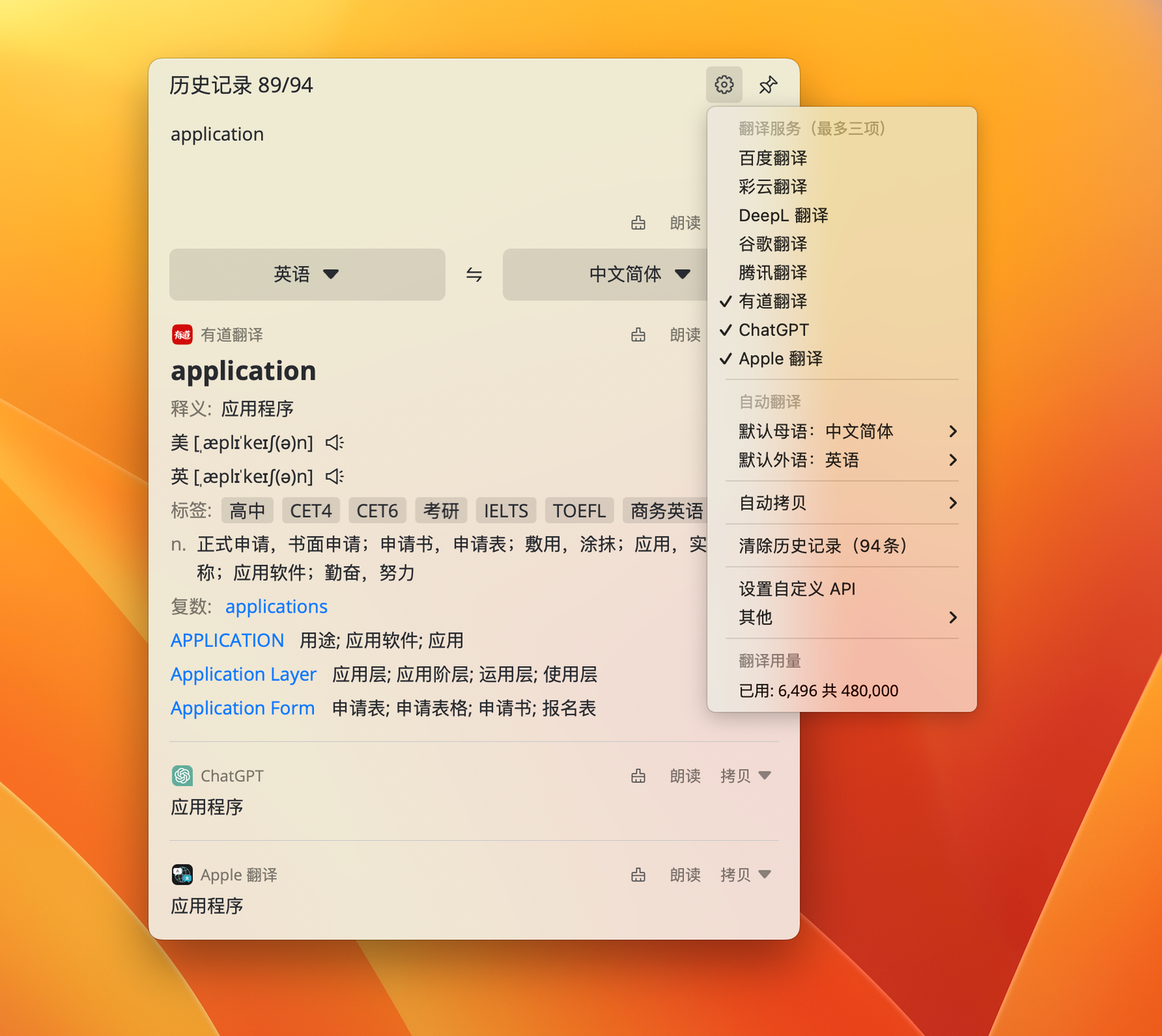
This technology already powers a suite of versatile features, including high-quality text translation, document translation that preserves formatting, and impressive photo translation. Most relevant to the F1 radio question is Youdao"s existing voice translation feature. This demonstrates a foundational ability to process spoken language, convert it to text, translate it, and render it in another language. This existing infrastructure for handling audio input is the essential launchpad from which a more specialized, high-performance feature for motorsports could be developed.
What Makes Translating F1 Team Radio So Difficult?
Translating a calm, clearly spoken sentence in a quiet room is one thing. Accurately interpreting a stressed-out F1 driver"s message amidst the roar of a 1,000-horsepower engine is another challenge entirely. Several key factors make team radio one of the most difficult audio sources to translate in real-time.
The "Need for Speed": Real-Time Processing Demands
In Formula 1, information is currency, and a delay of even a second can be the difference between a pit stop that gains a position and one that loses it. A translation feature would need to operate with near-zero latency. The audio must be captured, sent for processing, denoised, transcribed, translated, and delivered to the user almost instantaneously. This requires immense computational efficiency and optimized data pipelines, far beyond what is needed for casual conversation translation.
A World of Jargon: The Specialized Vocabulary
F1 is filled with highly specific, context-dependent jargon that a general translation model would not understand. Phrases like "Box, box," "undercut," "dirty air," "marbles," and "tyre degradation" have precise meanings within the sport. An AI would need to be specifically trained to not only recognize these terms but also to translate them accurately according to the race context. For instance, "Box" doesn"t refer to a cardboard container; it"s an urgent command to enter the pit lane.
Noise and Accents: The Complex Audio Environment
The audio environment of an F1 car is extreme. The primary signal (the driver"s voice) is often buried under engine noise, wind turbulence, radio static, and transmission crackles. Furthermore, the grid is a melting pot of nationalities. Drivers and engineers communicate in English, but with a wide variety of accents—from Spanish and Finnish to French and Japanese. A successful translation system must be incredibly robust at isolating the voice from the background noise and accurately transcribing speech across this diverse phonetic landscape.
How Could AI Technology Solve These Translation Puzzles?
While the challenges are significant, the tools to solve them are rapidly advancing. The path to translating F1 team radio lies in combining several cutting-edge AI technologies.
Advanced Denoising and Source Separation Algorithms
Modern AI is becoming exceptionally good at audio processing. Advanced algorithms, often based on deep learning, can be trained to identify the specific frequency profile of a human voice versus an F1 engine or radio static. This allows the system to perform "source separation," digitally isolating the driver"s speech from the cacophony of background noise before it is sent to the transcription engine, dramatically improving accuracy.
Domain-Specific AI Model Training
The solution to the jargon problem is specialization. A general NMT model is a jack-of-all-trades. A specialized model would be created by training it on a massive, curated dataset composed exclusively of F1 content. This would include thousands of hours of team radio recordings, technical documents, race commentaries, and driver interviews. This process would teach the AI the unique lexicon of the sport, enabling it to understand and correctly translate terms like "lift and coast" with high precision.
Context-Aware Neural Machine Translation (NMT)
The most advanced translation models go beyond individual sentences; they consider the broader context. A context-aware system for F1 could integrate live race data. For example, if the AI knows that a driver is on 20-lap-old soft tires, it will have a higher probability of correctly interpreting a message about "degradation" or "cliff." This fusion of linguistic and situational data is key to achieving human-level understanding and accuracy.
What Would a Hypothetical "F1 Mode" in Youdao Look Like?
Imagining this feature within the Youdao Translation Dictionary helps illustrate its potential. It might be a special "F1 Mode" or "Sports Live" feature. When activated during a race broadcast, it could overlay real-time translated subtitles for team radio on the user"s screen. The user interface could be designed for clarity and immediate comprehension, perhaps with color-coding for different teams or drivers.
To further enhance the experience, advanced features could be integrated, providing immense value to both new and seasoned fans.
| Hypothetical Feature | Benefit to the User |
|---|---|
| Real-Time Subtitles | Instantly understand what drivers and engineers are saying, regardless of language. |
| Jargon Glossary | Tap on a technical term like "undercut" to get an instant pop-up definition. |
| Driver-Specific Models | AI models fine-tuned for the specific accent and speech patterns of each driver for higher accuracy. |
| Tone Analysis | An icon or text indicator showing if the driver"s tone is urgent, frustrated, or calm. |
How Would Real-Time Radio Translation Change the Fan Experience?
The introduction of reliable, real-time team radio translation would be transformative for Formula 1 viewership. It would democratize access to the strategic heart of the sport, which is often hidden behind a wall of technical language and frantic communication.
International fans, who make up a huge portion of the F1 audience, would no longer be passive observers of these crucial moments. They could fully comprehend the drama of a sudden strategy change, the tension of a reliability issue, or the elation of a perfectly executed team order. This would create a much deeper and more personal connection between the fans and the teams and drivers they support. It would make the sport more inclusive and engaging, allowing anyone to appreciate the intricate chess match that unfolds at 300 km/h.
What is Youdao"s Potential Role in This Future of Sports Translation?
As a pioneer in AI-driven translation, Youdao is perfectly positioned to lead this innovation. The company"s extensive experience in developing and scaling Neural Machine Translation (NMT) provides the technical credibility needed for such an ambitious project. The challenge of translating F1 team radio is a high-profile "acid test" for the next generation of real-time voice translation technology.
By exploring and potentially developing a solution for this, Youdao would not only be creating a powerful feature for millions of sports fans but also be pushing the boundaries of what is possible in AI communication. Successfully tackling the extreme environment of F1 would demonstrate a technological mastery that could then be applied to other real-time, high-stakes scenarios, from international business negotiations to emergency response coordination. The journey toward 2026 is a race for innovation, both on the track and in the technology that brings the sport to life.